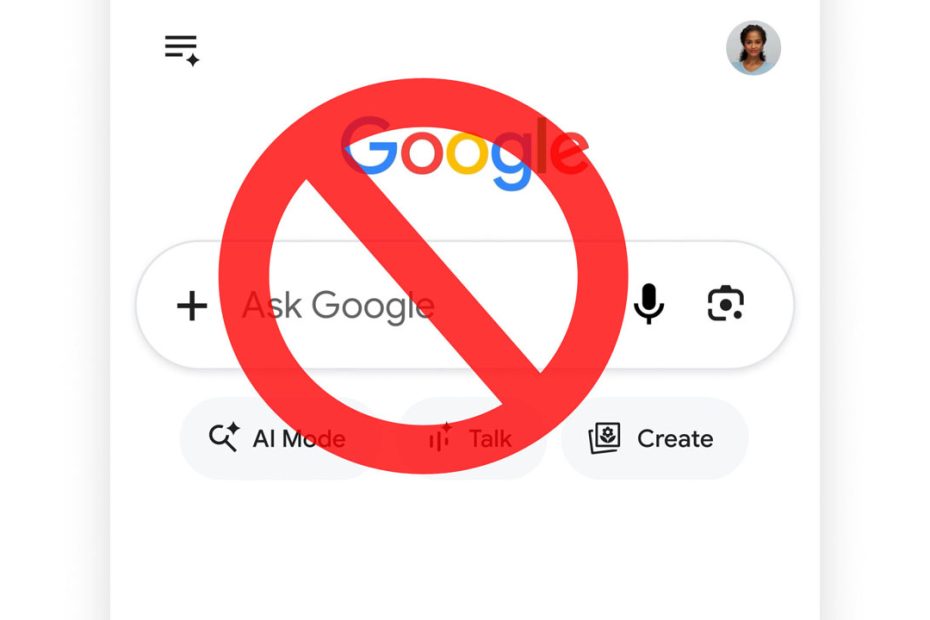
Google may have just broken the open web as we knew it. And many of your favorite websites could disappear forever in the coming years. Millions of people working across the web economy may eventually have to look for new jobs. Why?..
Once upon a time, Google defeated Yahoo – not because it had more colorful boxes, banners, ads, or services on the homepage. It won because it did the opposite: a white screen, a logo, a simple search bar, and the feeling that the entire internet was accessible through one short query. It was a fair trade: you typed a few words, Google showed links and ads, websites received clicks and audiences, and users got access to multiple sources.
Now that deal is starting to collapse.
Google has announced the biggest transformation of Search in more than 25 years: Search is evolving into an AI – driven interface powered by Gemini, AI Mode, multimodal queries, prompts, files, images, videos, and even Chrome tabs as input sources. According to announcements at Google I/O 2026, the company positions this as a merger of “the best of Search” and “the best of AI,” with Gemini 3.5 Flash becoming the default model for AI Mode globally.
It sounds “technological.” But for the open web, this may become the moment when the old internet model finally breaks apart. Your favorite websites, blogs, independent media outlets, local projects, and niche professional resources may simply fail to survive in an era where Google extracts their content, synthesizes answers, and keeps users inside its own ecosystem.
This is not a minor interface update. It is a fundamental shift in the entire dynamic of the web.
How Google Turned Search From an Internet Navigation Map Into an AI – Slop Answer Machine
Classic search was navigation. It was imperfect, commercialized, overloaded with ads — but at its core, it still revolved around links. Users saw different sources, compared information, opened websites, read authors, recognized media brands, and gradually formed their own information diet.
AI – powered search changes that behavior. Instead of a list of sources, users increasingly receive a ready – made answer. Instead of visiting a website, they get a summarized synthesis. Instead of choosing between multiple viewpoints, they see one convenient block of text that appears confident even when it is wrong.
Google, of course, says users will still see a “range of results” and will still be able to visit websites. Technically, that is true. But the real question is not whether links still exist. The question is how many people will actually reach them once the answer already appears at the top — cleanly packaged by an AI system. And many users no longer think critically about the reliability or origin of that information.
So what are AI Overviews? They are AI – generated answer blocks shown above or alongside traditional search results. For users, they are convenient. For websites, they are often devastating.
Why AI Overviews Hurt Websites and the Open Web
The problem is not simply that Google shows AI – generated answers. The deeper problem is economic.
For decades, the open web functioned through an exchange: websites created content, Google indexed it, users clicked through, and publishers earned traffic, advertising revenue, subscribers, clients, or reputation.
AI Overviews and AI Mode distort this exchange. Website content is used to generate answers, but the website itself may receive no click at all. Research on the impact of AI Overviews on Wikipedia found an approximately 15% drop in daily traffic for English – language articles included in AI – generated summaries. Another recent study on Google AI Overviews showed that roughly 11% of atomic factual claims inside AI answers were not supported by the cited pages themselves. AI – generated search also creates a new source – selection mechanism that differs significantly from classic search ranking.
And this is the core conflict: Google extracts value from the web while increasingly refusing to return attention back to it. But attention is money. Attention funds editorial teams, writer salaries, updated guides, expert reviews, independent testing, local journalism, and small niche websites without corporate – level budgets.
The irony is brutal. AI became “smarter” precisely because it spent decades feeding on the open web. And now it may destroy the economic conditions that allowed high – quality open web content to exist in the first place.
Google, Advertising, and the Trust Problem
Critics have long argued that Google has a built – in conflict of interest: it simultaneously controls search, Chrome, advertising infrastructure, analytics, YouTube, and now an AI layer sitting on top of information itself. This is not simply “a large company.” It is a gatekeeper to knowledge.
There is also a political dimension to concentrated information power. Google donated $1 million to Donald Trump’s 2025 inauguration fund, alongside several other major technology corporations. Does this automatically mean Google supports far – right ideology? No. Large corporations depend on political environments and often attempt to maintain favorable relationships with governments.
But now imagine a search experience where users no longer see ten sources — only one AI – generated answer. Who defines its tone? Which sources enter the synthesis? Which perspectives are excluded? Which errors are presented as truth?
This is no longer just an SEO issue. It is an information hygiene issue.
Why Many People Feel Google Search Has Become Worse
Many users feel classic Google Search has become less useful: more ads, more SEO spam, more aggregators, more duplicated content, fewer independent websites, fewer authentic forums — and increasingly more AI – generated clutter.
Part of this is undeniably the result of the SEO industry itself, which spent years optimizing content for algorithms instead of humans. But Google is not merely an observer. It created the rules of this ecosystem.
During U.S. antitrust proceedings, internal Google documents became public, revealing discussions about increasing search query volume and advertising revenue. Search Engine Land cited an email from Google Ads VP Jerry Dischler referencing the need to “inject queries ASAP from Chrome” to help meet quarterly financial targets.
At the same time, many website owners have noticed that Google has recently deindexed large numbers of older pages. There is no direct public proof that this is specifically tied to AI resource allocation. However, site owners consistently report slower indexing, selective crawling, and reduced visibility. Indexation has become difficult again — similar to the early days of the web when crawler resources were limited. This may reflect changes in quality standards, crawl budgets, infrastructure priorities, or a combination of factors.
Do we have definitive proof that Google intentionally worsens search quality? No. But many signs point in that direction.
Search is not a neutral library. It is a commercial system where interfaces, Chrome, advertising infrastructure, and financial incentives may be far more tightly interconnected than users would like to believe.
And what happens next with AI advertising remains an open question. Imagine a chatbot subtly inserting sponsored recommendations into responses based on information you mentioned in a supposedly private Gmail conversation or personal document. Privacy concerns surrounding major tech platforms are already far from theoretical.
From Google’s perspective, keeping users inside AI – generated answers while showing ads, collecting behavioral data, and avoiding outbound clicks may simply be more profitable than supporting the old open web model.
The economic logic is obvious.
Uncomfortable? Absolutely.
The Best Alternatives to Google Search
If search becomes an AI intermediary layer, users should consciously diversify the tools they rely on. Maybe it is time to begin the process of “de – Googling” your digital life — perhaps even by uninstalling Chrome tomorrow morning and replacing it with Firefox over coffee.
Several alternatives are worth exploring and recommending to less technical users:
- Ecosia.org and Qwant.com — classic – style search engines where AI features remain optional. Both are based in the EU and participate in the European Search Perspective initiative, which aims to build an independent European search index instead of relying entirely on Google or Bing.
- noai.duckduckgo.com — a NoAI version of DuckDuckGo that disables AI – generated features and filters AI – generated images as much as possible. It also maintains a small independent index. For users who simply want to search the web without an AI layer, it is a practical option.
- Kagi.com — a paid search engine without ads or tracking. Its business model is straightforward: users pay ($5–25/month), not advertisers. That reduces incentives to manipulate attention.
- Smaller niche search engines and specialized indexes — useful for technical documentation, scientific materials, forums, local search, or privacy – focused browsing.
Brave Search also deserves mention due to its independent search index.
Bing is more complicated: classic search still exists there, but many suspect Microsoft may eventually transform it into a Copilot – centered AI ecosystem as well.
And one category should be avoided entirely: search engines and browsers associated with the Russian state, including Yandex Browser, Uran, Sputnik, Atom, and similar platforms. These systems function as heavily censored surveillance – oriented software ecosystems.
So what should users choose instead of Google?
For everyday search, DuckDuckGo or Ecosia are reasonable starting points. For a premium search experience, Kagi is worth testing. And for supporting European digital independence, Qwant and Ecosia are particularly important projects to watch.
How to Help Preserve the Open Web
The open web will not save itself.
If users want independent sources rather than AI – generated summaries of other people’s work, habits must change. Small actions matter because website survival increasingly depends on direct audience relationships.
This is especially important for smaller language ecosystems and regional internet spaces, where independent voices are already fragile.
Here are practical ways to support websites you value:
- Bookmark websites directly instead of repeatedly searching for them via Google
- Subscribe to newsletters, RSS feeds, Telegram channels, LinkedIn pages, YouTube channels, or other direct updates
- Donate if possible
- Share articles directly instead of only interacting with short social media summaries
- Explain to less technical users that AI – generated summaries are not substitutes for independent sources
- Use alternative search engines for at least some searches
- Support regulation requiring transparency, compensation mechanisms, and meaningful opt – out rights for publishers
In Europe, these discussions are already becoming formal policy issues. The European Publishers Council has filed complaints with the European Commission, accusing Google and Alphabet of abusing dominant market positions through AI Overviews and AI Mode. The core argument is not opposition to innovation itself, but opposition to a dominant gatekeeper using publisher content without consent, compensation, or meaningful protection for journalism.
What This Means for SEO
SEO is not dead. But the center of gravity is shifting.
Websites still matter as business storefronts, trust signals, conversion platforms, and proof of expertise — especially for commercial projects.
The greatest risk falls on informational projects, encyclopedic resources, media outlets, and blogs that depended heavily on large volumes of organic traffic. If users receive answers directly inside AI Overviews, many visits simply disappear.
Commercial websites face a more complicated — but not hopeless — situation. Users still need to compare contractors, evaluate services, check portfolios, review pricing, read case studies, and submit inquiries.
So what should businesses do after AI search?
- Latest Google Recommendations for Websites: What Still Matters in a Search Landscape Driven by AI
- Business Visibility in AI Search: How to Turn it Into Strategic Advantage
Rely less on anonymous informational traffic and focus more on brand – building, trust, and direct audience channels. Service pages should clearly explain: who performs the work, what is included, what risks exist, what realistic outcomes look like, and which case studies support those claims.
Technical SEO still matters enormously: speed, crawlability, indexing, schema markup, internal linking, logical architecture, and properly structured landing pages.
Off – page SEO must also evolve. It is no longer just about “buying backlinks.” It is about building brand mentions, expert citations, media visibility, local authority, social presence, and real – world reputation signals. This is exactly what are we providing here at Wowtot directory.
AI systems may interpret these signals differently – but humans already do.
In our opinion, the best strategy today is not trying to please AI systems, but becoming a source that cannot easily be replaced by a short AI summary: a source with original data, real expertise, transparent processes, unique perspectives, and lived experience.
Conclusion: Google Will Destroy the Web If We Stay Passive
As long as the AI bubble continues expanding, Google is reshaping search in ways that may make the old open web less visible, less profitable, and less sustainable.
AI Mode, AI Overviews, and the new AI – centric search interface are not merely convenient tools. They represent a new layer of control over what people see, read, and perceive as truth.
But the open web is not dead yet.
It simply can no longer rely on a single corporation as the main gateway to audiences.
For users, this means: open original sources, support websites directly, try alternatives to Google, and stop confusing AI summaries with actual knowledge.
For businesses, this means: build a brand, strengthen your website, develop direct communication channels, and create experience – based content rather than generic keyword pages.
Because if professional and informational websites disappear, AI will not become smarter. It will simply begin recycling an increasingly poorer, weaker, and less trustworthy internet. And that may be the moment when the “Dead Internet Theory” stops sounding like science fiction – and starts looking real.